
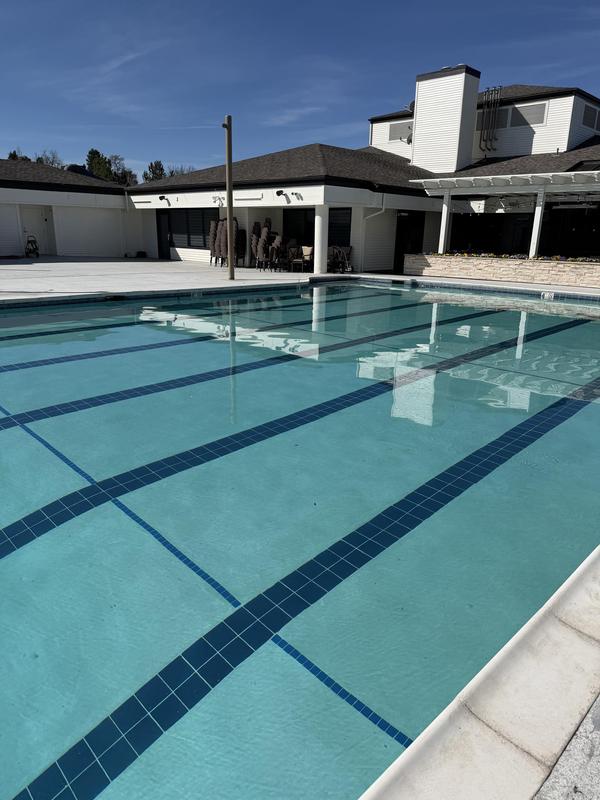

Water chemistry can seem intimidating, but understanding the basics is key to keeping your pool safe and enjoyable. Here’s a simple breakdown of the most important chemical factors:
pH (7.4 – 7.6)
pH measures how acidic or basic your water is. If pH is too low, water becomes corrosive and can damage equipment. If pH is too high, chlorine becomes less effective and scale can form on surfaces.
Total Alkalinity (80 – 120 ppm)
Alkalinity acts as a buffer for pH. When alkalinity is in the proper range, pH stays stable. Low alkalinity causes pH to fluctuate wildly; high alkalinity makes pH difficult to adjust.
Calcium Hardness (200 – 400 ppm)
This measures dissolved calcium in the water. Low calcium hardness can cause plaster etching and corrosion. High calcium hardness leads to scale formation on surfaces and equipment.
Free Chlorine (1 – 3 ppm)
Chlorine is your primary sanitizer. It kills bacteria, viruses, and algae. Too little chlorine and your pool becomes unsafe. Too much and swimmers experience eye and skin irritation.
Cyanuric Acid (30 – 50 ppm)
Also called stabilizer, this protects chlorine from being destroyed by sunlight. Without stabilizer, your chlorine can be depleted in just a few hours of direct sun.
Total Dissolved Solids (TDS)
TDS measures all dissolved substances in your pool water. When TDS exceeds 1500-2000 ppm above the source water, it’s time to drain and refill.
Pro Tips:
- Test your water at least twice a week during swim season
- Add chemicals in the evening to avoid sunlight interference
- Always follow manufacturer instructions
- Keep a log of your test results to track trends
Let the experts handle it. Our weekly maintenance service includes professional water testing and precise chemical balancing.